
Waikato, Bay of Plenty, Lakes, Tairāwhiti, Taranaki > Private Hospitals & Specialists >
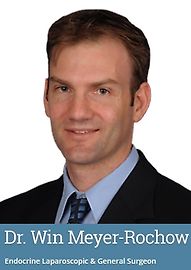
Dr Win Meyer-Rochow - Thyroid, Parathyroid, Endocrine and General Surgeon
Private Service, General Surgery, Endocrinology, ENT/ Head & Neck Surgery
Today
8:30 AM to 5:00 PM.
Description
Dr Meyer-Rochow offers a wide range of general surgical procedures with particular expertise in endocrine surgery, specifically thyroid, parathyroid and adrenal gland surgery. He specialises in minimally invasive and minimal access (otherwise known as "keyhole" surgery) surgical techniques.
Dr Meyer-Rochow is the first New Zealand clinician to have completed training and can offer radiofrequency ablation (RFA) of thyroid nodules for patients in New Zealand.
Expert care for a range of surgical procedures is offered, including:
Consultants
-
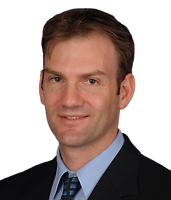
Dr Win Meyer-Rochow
Thyroid, Parathyroid, Endocrine and General Surgeon
Ages
Adult / Pakeke, Older adult / Kaumātua, Youth / Rangatahi
How do I access this service?
Referral
Please note that all appointments must include a letter of referral by your GP.
Make an appointment
Referral Expectations
Fees and Charges Categorisation
Fees apply
Fees and Charges Description
Win is a Southern Cross Affiliated Provider.
Hours
8:30 AM to 5:00 PM.
| Mon – Fri | 8:30 AM – 5:00 PM |
|---|
Monday to Friday by appointment only
Languages Spoken
English
Services Provided
Abnormalities of the endocrine system treated by general surgery include disorders of the pancreas and adrenal glands in the abdomen and the thyroid and parathyroid glands in the neck. These are often very complex conditions requiring extensive investigations. If surgery is required it is often quite complicated and will usually mean a stay in hospital for several days or even longer.
Abnormalities of the endocrine system treated by general surgery include disorders of the pancreas and adrenal glands in the abdomen and the thyroid and parathyroid glands in the neck. These are often very complex conditions requiring extensive investigations. If surgery is required it is often quite complicated and will usually mean a stay in hospital for several days or even longer.
Abnormalities of the endocrine system treated by general surgery include disorders of the pancreas and adrenal glands in the abdomen and the thyroid and parathyroid glands in the neck. These are often very complex conditions requiring extensive investigations. If surgery is required it is often quite complicated and will usually mean a stay in hospital for several days or even longer.
Gallstones are formed if the gallbladder is not working properly, and the standard treatment is to remove the gallbladder (cholecystectomy). This procedure is usually performed using a laparoscopic (keyhole) approach. Laparoscopic: several small incisions (cuts) are made in the abdomen (stomach) and a narrow tube with a tiny camera attached (laparoscope) is inserted. This allows the surgeon a view of the gallbladder and, by inserting small surgical instruments through the other cuts, the gallbladder can be removed. Open: an abdominal incision is made and the gallbladder removed.
Gallstones are formed if the gallbladder is not working properly, and the standard treatment is to remove the gallbladder (cholecystectomy). This procedure is usually performed using a laparoscopic (keyhole) approach. Laparoscopic: several small incisions (cuts) are made in the abdomen (stomach) and a narrow tube with a tiny camera attached (laparoscope) is inserted. This allows the surgeon a view of the gallbladder and, by inserting small surgical instruments through the other cuts, the gallbladder can be removed. Open: an abdominal incision is made and the gallbladder removed.
Gallstones are formed if the gallbladder is not working properly, and the standard treatment is to remove the gallbladder (cholecystectomy). This procedure is usually performed using a laparoscopic (keyhole) approach.
Laparoscopic: several small incisions (cuts) are made in the abdomen (stomach) and a narrow tube with a tiny camera attached (laparoscope) is inserted. This allows the surgeon a view of the gallbladder and, by inserting small surgical instruments through the other cuts, the gallbladder can be removed.
Open: an abdominal incision is made and the gallbladder removed.
Haemorrhoids are a condition where the veins under the lining of the anus are congested and enlarged. Less severe haemorrhoids can be managed with simple treatments such as injection or banding which can be performed in the clinic while larger ones will require surgery. Haemorrhoid removal: Haemorrhoidectomy: each haemorrhoid or pile is tied off and then cut away. Stapled Haemorrhoidectomy: a circular stapling device is used to pull the haemorrhoid tissue back into its normal position.
Haemorrhoids are a condition where the veins under the lining of the anus are congested and enlarged. Less severe haemorrhoids can be managed with simple treatments such as injection or banding which can be performed in the clinic while larger ones will require surgery. Haemorrhoid removal: Haemorrhoidectomy: each haemorrhoid or pile is tied off and then cut away. Stapled Haemorrhoidectomy: a circular stapling device is used to pull the haemorrhoid tissue back into its normal position.
Haemorrhoids are a condition where the veins under the lining of the anus are congested and enlarged. Less severe haemorrhoids can be managed with simple treatments such as injection or banding which can be performed in the clinic while larger ones will require surgery.
Haemorrhoid removal:
Haemorrhoidectomy: each haemorrhoid or pile is tied off and then cut away.
Stapled Haemorrhoidectomy: a circular stapling device is used to pull the haemorrhoid tissue back into its normal position.
A hernia exists where part of the abdominal wall is weakened, and the contents of the abdomen push through to the outside. This is most commonly seen in the groin area but can occur in other places. Surgical treatment is usually quite straightforward and involves returning the abdominal contents to the inside and then reinforcing the abdominal wall in some way. Hiatus Hernia: Laparoscopic: several small incisions (cuts) are made in the abdomen (stomach) and a narrow tube with a tiny camera attached (laparoscope) is inserted. Small instruments are inserted through the other cuts, allowing the surgeon to push the hernia (part of the stomach and lower oesophagus that is bulging into the chest) back into position in the abdominal cavity. The hiatus (opening) in the diaphragm (a sheet of muscle between the chest and stomach) is tightened and the stomach is stitched into place. Open: an abdominal incision is made over the hernia and the hernia is pushed back into position in the abdominal cavity. The hiatus (opening in the diaphragm) is tightened and the stomach is stitched into place. Fundoplication: during the above procedures, the top part of the stomach (fundus) may be secured in position by wrapping it around the oesophagus. Inguinal Hernia: Laparoscopic: several small incisions are made in the abdomen and a narrow tube with a tiny camera attached (laparoscope) is inserted. Small instruments are inserted through the other cuts, allowing the surgeon to push the hernia (part of the intestine that is bulging through the abdominal wall) back into its original position. The weakness in the abdominal wall is repaired. Open: an abdominal incision is made and the hernia is pushed back into position. The weakness in the abdominal wall is repaired. Umbilical Hernia: An incision is made underneath the navel (tummy button) and the hernia (part of the intestine that is bulging through the abdominal wall) is pushed back into the abdominal cavity. The weakness in the abdominal wall is repaired. Incisional Hernia: Laparoscopic: several small incisions are made in the abdomen and a narrow tube with a tiny camera attached (laparoscope) is inserted. Small instruments are inserted through the other cuts, allowing the surgeon to push the hernia (part of the intestine that is bulging through the abdominal wall) back into its original position. Open: an abdominal incision is made and the hernia is pushed back into position.
A hernia exists where part of the abdominal wall is weakened, and the contents of the abdomen push through to the outside. This is most commonly seen in the groin area but can occur in other places. Surgical treatment is usually quite straightforward and involves returning the abdominal contents to the inside and then reinforcing the abdominal wall in some way. Hiatus Hernia: Laparoscopic: several small incisions (cuts) are made in the abdomen (stomach) and a narrow tube with a tiny camera attached (laparoscope) is inserted. Small instruments are inserted through the other cuts, allowing the surgeon to push the hernia (part of the stomach and lower oesophagus that is bulging into the chest) back into position in the abdominal cavity. The hiatus (opening) in the diaphragm (a sheet of muscle between the chest and stomach) is tightened and the stomach is stitched into place. Open: an abdominal incision is made over the hernia and the hernia is pushed back into position in the abdominal cavity. The hiatus (opening in the diaphragm) is tightened and the stomach is stitched into place. Fundoplication: during the above procedures, the top part of the stomach (fundus) may be secured in position by wrapping it around the oesophagus. Inguinal Hernia: Laparoscopic: several small incisions are made in the abdomen and a narrow tube with a tiny camera attached (laparoscope) is inserted. Small instruments are inserted through the other cuts, allowing the surgeon to push the hernia (part of the intestine that is bulging through the abdominal wall) back into its original position. The weakness in the abdominal wall is repaired. Open: an abdominal incision is made and the hernia is pushed back into position. The weakness in the abdominal wall is repaired. Umbilical Hernia: An incision is made underneath the navel (tummy button) and the hernia (part of the intestine that is bulging through the abdominal wall) is pushed back into the abdominal cavity. The weakness in the abdominal wall is repaired. Incisional Hernia: Laparoscopic: several small incisions are made in the abdomen and a narrow tube with a tiny camera attached (laparoscope) is inserted. Small instruments are inserted through the other cuts, allowing the surgeon to push the hernia (part of the intestine that is bulging through the abdominal wall) back into its original position. Open: an abdominal incision is made and the hernia is pushed back into position.
A hernia exists where part of the abdominal wall is weakened, and the contents of the abdomen push through to the outside. This is most commonly seen in the groin area but can occur in other places. Surgical treatment is usually quite straightforward and involves returning the abdominal contents to the inside and then reinforcing the abdominal wall in some way.
Hiatus Hernia:
Laparoscopic: several small incisions (cuts) are made in the abdomen (stomach) and a narrow tube with a tiny camera attached (laparoscope) is inserted. Small instruments are inserted through the other cuts, allowing the surgeon to push the hernia (part of the stomach and lower oesophagus that is bulging into the chest) back into position in the abdominal cavity. The hiatus (opening) in the diaphragm (a sheet of muscle between the chest and stomach) is tightened and the stomach is stitched into place.
Open: an abdominal incision is made over the hernia and the hernia is pushed back into position in the abdominal cavity. The hiatus (opening in the diaphragm) is tightened and the stomach is stitched into place.
Fundoplication: during the above procedures, the top part of the stomach (fundus) may be secured in position by wrapping it around the oesophagus.
Inguinal Hernia:
Laparoscopic: several small incisions are made in the abdomen and a narrow tube with a tiny camera attached (laparoscope) is inserted. Small instruments are inserted through the other cuts, allowing the surgeon to push the hernia (part of the intestine that is bulging through the abdominal wall) back into its original position. The weakness in the abdominal wall is repaired.
Open: an abdominal incision is made and the hernia is pushed back into position. The weakness in the abdominal wall is repaired.
Umbilical Hernia:
An incision is made underneath the navel (tummy button) and the hernia (part of the intestine that is bulging through the abdominal wall) is pushed back into the abdominal cavity. The weakness in the abdominal wall is repaired.
Incisional Hernia:
Laparoscopic: several small incisions are made in the abdomen and a narrow tube with a tiny camera attached (laparoscope) is inserted. Small instruments are inserted through the other cuts, allowing the surgeon to push the hernia (part of the intestine that is bulging through the abdominal wall) back into its original position.
Open: an abdominal incision is made and the hernia is pushed back into position.
Skin conditions dealt with include lumps, tumours, cysts and other lesions of the skin and underlying tissues. These are often fairly simple conditions that can be dealt with by performing minor operations under local anaesthetic (the area of skin being treated is numbed). Often these procedures are performed as outpatient or day case procedures.
Skin conditions dealt with include lumps, tumours, cysts and other lesions of the skin and underlying tissues. These are often fairly simple conditions that can be dealt with by performing minor operations under local anaesthetic (the area of skin being treated is numbed). Often these procedures are performed as outpatient or day case procedures.
Skin conditions dealt with include lumps, tumours, cysts and other lesions of the skin and underlying tissues. These are often fairly simple conditions that can be dealt with by performing minor operations under local anaesthetic (the area of skin being treated is numbed). Often these procedures are performed as outpatient or day case procedures.
Laparoscopic: several small incisions (cuts) are made in the lower right abdomen (stomach) and a narrow tube with a tiny camera attached (laparoscope) in inserted. This allows the surgeon a view of the appendix and, by inserting small surgical instruments through the other cuts, the appendix can be removed. Open: an incision is made in the lower right abdomen and the appendix removed.
Laparoscopic: several small incisions (cuts) are made in the lower right abdomen (stomach) and a narrow tube with a tiny camera attached (laparoscope) in inserted. This allows the surgeon a view of the appendix and, by inserting small surgical instruments through the other cuts, the appendix can be removed. Open: an incision is made in the lower right abdomen and the appendix removed.
Laparoscopic: several small incisions (cuts) are made in the lower right abdomen (stomach) and a narrow tube with a tiny camera attached (laparoscope) in inserted. This allows the surgeon a view of the appendix and, by inserting small surgical instruments through the other cuts, the appendix can be removed.
Open: an incision is made in the lower right abdomen and the appendix removed.
The parathyroid glands are four small glands located in the neck which produce parathyroid hormone, a hormone involved in the regulation of calcium and phosphate levels. Overactivity of one or more of the glands (hyperparathyroidism) results in excessive parathyroid hormone production. Parathyroidectomy is a surgical procedure to remove one or more of the parathyroid glands through an incision (cut) in the front of and at the base of the neck.
The parathyroid glands are four small glands located in the neck which produce parathyroid hormone, a hormone involved in the regulation of calcium and phosphate levels. Overactivity of one or more of the glands (hyperparathyroidism) results in excessive parathyroid hormone production. Parathyroidectomy is a surgical procedure to remove one or more of the parathyroid glands through an incision (cut) in the front of and at the base of the neck.
The parathyroid glands are four small glands located in the neck which produce parathyroid hormone, a hormone involved in the regulation of calcium and phosphate levels. Overactivity of one or more of the glands (hyperparathyroidism) results in excessive parathyroid hormone production.
Parathyroidectomy is a surgical procedure to remove one or more of the parathyroid glands through an incision (cut) in the front of and at the base of the neck.
Skin lesions can be divided into two groups: Benign (non-cancerous): e.g. moles, cysts, warts, tags. These may be removed to prevent spreading (warts), stop discomfort if the lesion is being irritated by clothing/jewellery or to improve appearance. Malignant (cancerous): basal cell and squamous cell carcinomas are generally slow growing and unlikely to spread to other parts of the body. Melanoma is a serious skin cancer that can spread to other parts of the body. Urgent removal is recommended. Surgery to remove skin lesions usually involves an office or outpatient visit, local anaesthesia (the area around the scar is numbed by injecting a local anaesthetic) and stitches. You may or may not have a dressing put on the wound and it is important to keep the area dry for 24 hours. Stitches may be removed in 1-2 weeks. You may need to take a few days off work after the surgery.
Skin lesions can be divided into two groups: Benign (non-cancerous): e.g. moles, cysts, warts, tags. These may be removed to prevent spreading (warts), stop discomfort if the lesion is being irritated by clothing/jewellery or to improve appearance. Malignant (cancerous): basal cell and squamous cell carcinomas are generally slow growing and unlikely to spread to other parts of the body. Melanoma is a serious skin cancer that can spread to other parts of the body. Urgent removal is recommended. Surgery to remove skin lesions usually involves an office or outpatient visit, local anaesthesia (the area around the scar is numbed by injecting a local anaesthetic) and stitches. You may or may not have a dressing put on the wound and it is important to keep the area dry for 24 hours. Stitches may be removed in 1-2 weeks. You may need to take a few days off work after the surgery.
Skin lesions can be divided into two groups:
- Benign (non-cancerous): e.g. moles, cysts, warts, tags. These may be removed to prevent spreading (warts), stop discomfort if the lesion is being irritated by clothing/jewellery or to improve appearance.
- Malignant (cancerous): basal cell and squamous cell carcinomas are generally slow growing and unlikely to spread to other parts of the body. Melanoma is a serious skin cancer that can spread to other parts of the body. Urgent removal is recommended.
Surgery to remove skin lesions usually involves an office or outpatient visit, local anaesthesia (the area around the scar is numbed by injecting a local anaesthetic) and stitches. You may or may not have a dressing put on the wound and it is important to keep the area dry for 24 hours. Stitches may be removed in 1-2 weeks. You may need to take a few days off work after the surgery.
The thyroid is a gland that sits in the front, and towards the bottom of, your neck. It is responsible for producing a hormone called thyroxin that affects many organs including the heart, muscles and bones. Thyroidectomy is a surgical procedure to remove all or part of the thyroid gland for reasons such as thyroid cancer, goitre (enlarged thyroid), thyroid nodules or overactive thyroid (hyperthyroidism) that doesn't respond to other treatments. A thyroidectomy may be total (removal of the entire thyroid gland) or partial or lobectomy (removal of part of the gland).
The thyroid is a gland that sits in the front, and towards the bottom of, your neck. It is responsible for producing a hormone called thyroxin that affects many organs including the heart, muscles and bones. Thyroidectomy is a surgical procedure to remove all or part of the thyroid gland for reasons such as thyroid cancer, goitre (enlarged thyroid), thyroid nodules or overactive thyroid (hyperthyroidism) that doesn't respond to other treatments. A thyroidectomy may be total (removal of the entire thyroid gland) or partial or lobectomy (removal of part of the gland).
The thyroid is a gland that sits in the front, and towards the bottom of, your neck. It is responsible for producing a hormone called thyroxin that affects many organs including the heart, muscles and bones.
Thyroidectomy is a surgical procedure to remove all or part of the thyroid gland for reasons such as thyroid cancer, goitre (enlarged thyroid), thyroid nodules or overactive thyroid (hyperthyroidism) that doesn't respond to other treatments.
A thyroidectomy may be total (removal of the entire thyroid gland) or partial or lobectomy (removal of part of the gland).
Service types: Parathyroidectomy (removal of parathyroid glands), Thyroidectomy (thyroid removal).
Service types: Parathyroidectomy (removal of parathyroid glands), Thyroidectomy (thyroid removal).
Service types: Parathyroidectomy (removal of parathyroid glands), Thyroidectomy (thyroid removal).
Service types: Thyroidectomy (thyroid removal).
Service types: Thyroidectomy (thyroid removal).
Service types: Thyroidectomy (thyroid removal).
Laparoscopic: several small incisions (cuts) are made in the abdomen and a narrow tube with a tiny camera attached (laparoscope) is inserted. This allows the surgeon a view of the colon and, by inserting small surgical instruments through the other cuts, part or all of the colon can be removed. Open: an abdominal incision is made and part or all of the colon is removed.
Laparoscopic: several small incisions (cuts) are made in the abdomen and a narrow tube with a tiny camera attached (laparoscope) is inserted. This allows the surgeon a view of the colon and, by inserting small surgical instruments through the other cuts, part or all of the colon can be removed. Open: an abdominal incision is made and part or all of the colon is removed.
Laparoscopic: several small incisions (cuts) are made in the abdomen and a narrow tube with a tiny camera attached (laparoscope) is inserted. This allows the surgeon a view of the colon and, by inserting small surgical instruments through the other cuts, part or all of the colon can be removed.
Open: an abdominal incision is made and part or all of the colon is removed.
The adrenal glands are two small structures that sit on top of the kidneys and make important hormones that control things like stress response, blood pressure, metabolism, and salt balance. Disorders of the adrenal glands can result in under- or over-production of particular hormones, depending upon which part of the gland is affected e.g. in Cushing’s syndrome there is an excess of cortisol while in Addison’s disease there is not enough cortisol.
The adrenal glands are two small structures that sit on top of the kidneys and make important hormones that control things like stress response, blood pressure, metabolism, and salt balance. Disorders of the adrenal glands can result in under- or over-production of particular hormones, depending upon which part of the gland is affected e.g. in Cushing’s syndrome there is an excess of cortisol while in Addison’s disease there is not enough cortisol.
The adrenal glands are two small structures that sit on top of the kidneys and make important hormones that control things like stress response, blood pressure, metabolism, and salt balance.
Disorders of the adrenal glands can result in under- or over-production of particular hormones, depending upon which part of the gland is affected e.g. in Cushing’s syndrome there is an excess of cortisol while in Addison’s disease there is not enough cortisol.
Masses on the head and neck can be benign (noncancerous) or cancerous and can form in the larynx, pharynx, thyroid gland, salivary gland, mouth, neck, face, skull or any other structure in the head and neck region. Noncancerous masses such as cysts are often removed surgically to prevent them from pressing on nerves and other structures in the head and neck. Cancerous masses may be primary (arise in the head or neck) or secondary (they have spread from a primary tumour in another part of the body) and may be treated by a combination of radiotherapy, chemotherapy and surgery. Surgery can be quite extensive, including removal of lymph nodes in the neck, and require major reconstruction.
Masses on the head and neck can be benign (noncancerous) or cancerous and can form in the larynx, pharynx, thyroid gland, salivary gland, mouth, neck, face, skull or any other structure in the head and neck region. Noncancerous masses such as cysts are often removed surgically to prevent them from pressing on nerves and other structures in the head and neck. Cancerous masses may be primary (arise in the head or neck) or secondary (they have spread from a primary tumour in another part of the body) and may be treated by a combination of radiotherapy, chemotherapy and surgery. Surgery can be quite extensive, including removal of lymph nodes in the neck, and require major reconstruction.
Masses on the head and neck can be benign (noncancerous) or cancerous and can form in the larynx, pharynx, thyroid gland, salivary gland, mouth, neck, face, skull or any other structure in the head and neck region.
Noncancerous masses such as cysts are often removed surgically to prevent them from pressing on nerves and other structures in the head and neck.
Cancerous masses may be primary (arise in the head or neck) or secondary (they have spread from a primary tumour in another part of the body) and may be treated by a combination of radiotherapy, chemotherapy and surgery.
Surgery can be quite extensive, including removal of lymph nodes in the neck, and require major reconstruction.
A surgical procedure involving the removal of lymph nodes (bean-shaped glands that filter harmful agents picked up by the lymphatic system) from the neck to control the spread of cancer. It is most commonly done to treat head and neck cancers that have spread, or have the potential to spread, to the lymph nodes. There are different types of neck dissection, depending on how much tissue is removed – ranging from selective (only certain lymph nodes) to more extensive procedures.
A surgical procedure involving the removal of lymph nodes (bean-shaped glands that filter harmful agents picked up by the lymphatic system) from the neck to control the spread of cancer. It is most commonly done to treat head and neck cancers that have spread, or have the potential to spread, to the lymph nodes. There are different types of neck dissection, depending on how much tissue is removed – ranging from selective (only certain lymph nodes) to more extensive procedures.
A surgical procedure involving the removal of lymph nodes (bean-shaped glands that filter harmful agents picked up by the lymphatic system) from the neck to control the spread of cancer. It is most commonly done to treat head and neck cancers that have spread, or have the potential to spread, to the lymph nodes.
There are different types of neck dissection, depending on how much tissue is removed – ranging from selective (only certain lymph nodes) to more extensive procedures.
The parathyroid glands are four small glands located in the neck which produce parathyroid hormone, a hormone involved in the regulation of calcium and phosphate levels. Overactivity of one or more of the glands results in excessive parathyroid hormone production (hyperparathyroidism) and raised blood calcium levels which can lead to complications such as kidney stones and osteoporosis.
The parathyroid glands are four small glands located in the neck which produce parathyroid hormone, a hormone involved in the regulation of calcium and phosphate levels. Overactivity of one or more of the glands results in excessive parathyroid hormone production (hyperparathyroidism) and raised blood calcium levels which can lead to complications such as kidney stones and osteoporosis.
The parathyroid glands are four small glands located in the neck which produce parathyroid hormone, a hormone involved in the regulation of calcium and phosphate levels.
Overactivity of one or more of the glands results in excessive parathyroid hormone production (hyperparathyroidism) and raised blood calcium levels which can lead to complications such as kidney stones and osteoporosis.
The thyroid is a gland that sits in the front, and towards the bottom of, your neck. It is responsible for producing a hormone called thyroxin. Thyroxin has an important role in the body as it affects many organs including the heart, muscles and bones. Diseases that affect the thyroid can make it either overactive (producing too much thyroxin), underactive (not producing enough thyroxin) or enlarged (goitre). Endocrinologists specialise in these diseases as well as cancer of the thyroid. Tests Thyroid problems are usually picked up with a blood test but there are other tests you may have to work out why the problem has occurred. These include: An ultrasound scan. This is where a hand-held scanner head is passed over your thyroid gland and pictures are taken. A nuclear medicine scan. This is where you are given something to drink that contains a substance that only goes to the thyroid gland. Although it is radioactive it does not damage you or anyone else. Pictures are then taken of the thyroid gland that give the doctor information about what might be causing the problem. Fine needle aspirate (FNA). This is where the doctor puts a very fine needle (smaller than for a blood test) into the thyroid gland to take some cells to look at under the microscope.
The thyroid is a gland that sits in the front, and towards the bottom of, your neck. It is responsible for producing a hormone called thyroxin. Thyroxin has an important role in the body as it affects many organs including the heart, muscles and bones. Diseases that affect the thyroid can make it either overactive (producing too much thyroxin), underactive (not producing enough thyroxin) or enlarged (goitre). Endocrinologists specialise in these diseases as well as cancer of the thyroid. Tests Thyroid problems are usually picked up with a blood test but there are other tests you may have to work out why the problem has occurred. These include: An ultrasound scan. This is where a hand-held scanner head is passed over your thyroid gland and pictures are taken. A nuclear medicine scan. This is where you are given something to drink that contains a substance that only goes to the thyroid gland. Although it is radioactive it does not damage you or anyone else. Pictures are then taken of the thyroid gland that give the doctor information about what might be causing the problem. Fine needle aspirate (FNA). This is where the doctor puts a very fine needle (smaller than for a blood test) into the thyroid gland to take some cells to look at under the microscope.
The thyroid is a gland that sits in the front, and towards the bottom of, your neck. It is responsible for producing a hormone called thyroxin. Thyroxin has an important role in the body as it affects many organs including the heart, muscles and bones. Diseases that affect the thyroid can make it either overactive (producing too much thyroxin), underactive (not producing enough thyroxin) or enlarged (goitre). Endocrinologists specialise in these diseases as well as cancer of the thyroid.
Tests
Thyroid problems are usually picked up with a blood test but there are other tests you may have to work out why the problem has occurred. These include:
- An ultrasound scan. This is where a hand-held scanner head is passed over your thyroid gland and pictures are taken.
- A nuclear medicine scan. This is where you are given something to drink that contains a substance that only goes to the thyroid gland. Although it is radioactive it does not damage you or anyone else. Pictures are then taken of the thyroid gland that give the doctor information about what might be causing the problem.
- Fine needle aspirate (FNA). This is where the doctor puts a very fine needle (smaller than for a blood test) into the thyroid gland to take some cells to look at under the microscope.
Disability Assistance
Wheelchair access, Wheelchair accessible toilet, Mobility parking space
Parking
Free parking is available on site.
Pharmacy
Find your nearest pharmacies here
Website
Contact Details
8:30 AM to 5:00 PM.
-
Phone
(07) 847 0773
Healthlink EDI
thyroidc
Email
Website
192 Peachgrove Road
Claudelands
Hamilton
Waikato 3214
Street Address
192 Peachgrove Road
Claudelands
Hamilton
Waikato 3214
Was this page helpful?
This page was last updated at 11:15AM on May 13, 2026. This information is reviewed and edited by Dr Win Meyer-Rochow - Thyroid, Parathyroid, Endocrine and General Surgeon.