
Wellington > Private Hospitals & Specialists >
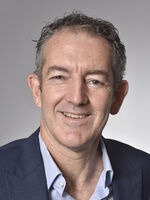
Dr Robert Rowan - Orthopaedic Surgeon
Private Service, Orthopaedics, Paediatrics
Description
Special interests
- Shoulder
- Elbow
- Wrist & Hand
- Arthroscopy
- Sports Surgery
- Paediatric Orthopaedics
- Spinal Deformity
Consultants
-

Dr Robert Rowan
Orthopaedic Surgeon
Services Provided
The anterior cruciate ligament (ACL) is a strong, stabilising ligament running through the centre of the knee between the femur (thigh bone) and tibia (shin bone). When the ACL is torn, frequently as the result of a sporting injury, arthroscopic surgery known as ACL Reconstruction is performed. The procedure involves replacement of the damaged ligament with tissue grafted from elsewhere, usually the patellar or hamstring tendon. The ends of the grafted tendon are attached to the femur at one end and the tibia at the other using screws or staples. For more information about ACL reconstruction please click here.
The anterior cruciate ligament (ACL) is a strong, stabilising ligament running through the centre of the knee between the femur (thigh bone) and tibia (shin bone). When the ACL is torn, frequently as the result of a sporting injury, arthroscopic surgery known as ACL Reconstruction is performed. The procedure involves replacement of the damaged ligament with tissue grafted from elsewhere, usually the patellar or hamstring tendon. The ends of the grafted tendon are attached to the femur at one end and the tibia at the other using screws or staples. For more information about ACL reconstruction please click here.
The anterior cruciate ligament (ACL) is a strong, stabilising ligament running through the centre of the knee between the femur (thigh bone) and tibia (shin bone).
When the ACL is torn, frequently as the result of a sporting injury, arthroscopic surgery known as ACL Reconstruction is performed. The procedure involves replacement of the damaged ligament with tissue grafted from elsewhere, usually the patellar or hamstring tendon. The ends of the grafted tendon are attached to the femur at one end and the tibia at the other using screws or staples.
For more information about ACL reconstruction please click here.
Carpal Tunnel Syndrome is caused by a pinched nerve in the wrist that causes tingling, numbness and pain in your hand. Surgery to relieve carpal tunnel syndrome involves making an incision (cut) from the middle of the palm of your hand to your wrist. Tissue that is pressing on the nerve is then cut to release the pressure.
Carpal Tunnel Syndrome is caused by a pinched nerve in the wrist that causes tingling, numbness and pain in your hand. Surgery to relieve carpal tunnel syndrome involves making an incision (cut) from the middle of the palm of your hand to your wrist. Tissue that is pressing on the nerve is then cut to release the pressure.
Carpal Tunnel Syndrome is caused by a pinched nerve in the wrist that causes tingling, numbness and pain in your hand.
Surgery to relieve carpal tunnel syndrome involves making an incision (cut) from the middle of the palm of your hand to your wrist. Tissue that is pressing on the nerve is then cut to release the pressure.
Hand and wrist surgeries are operations that help fix problems in your hands and wrists, like broken bones, arthritis, or injuries to the tendons, ligaments, or nerves. Surgery might be: Arthroscopic: less invasive surgery. The surgeon makes small cuts and uses a tiny camera to see inside. They can then fix or take out the damaged parts. Open: for more complicated problems, the surgeon makes a larger cut to get a better look and fix the damaged parts directly.
Hand and wrist surgeries are operations that help fix problems in your hands and wrists, like broken bones, arthritis, or injuries to the tendons, ligaments, or nerves. Surgery might be: Arthroscopic: less invasive surgery. The surgeon makes small cuts and uses a tiny camera to see inside. They can then fix or take out the damaged parts. Open: for more complicated problems, the surgeon makes a larger cut to get a better look and fix the damaged parts directly.
Hand and wrist surgeries are operations that help fix problems in your hands and wrists, like broken bones, arthritis, or injuries to the tendons, ligaments, or nerves. Surgery might be:
- Arthroscopic: less invasive surgery. The surgeon makes small cuts and uses a tiny camera to see inside. They can then fix or take out the damaged parts.
- Open: for more complicated problems, the surgeon makes a larger cut to get a better look and fix the damaged parts directly.
Several small incisions (cuts) are made in the shoulder through which is inserted a small telescopic instrument with a tiny camera attached (arthroscope). The surgeon is then able to remove any bony spurs or inflamed tissue and mend torn tendons of the rotator cuff group.
Several small incisions (cuts) are made in the shoulder through which is inserted a small telescopic instrument with a tiny camera attached (arthroscope). The surgeon is then able to remove any bony spurs or inflamed tissue and mend torn tendons of the rotator cuff group.
Several small incisions (cuts) are made in the shoulder through which is inserted a small telescopic instrument with a tiny camera attached (arthroscope). The surgeon is then able to remove any bony spurs or inflamed tissue and mend torn tendons of the rotator cuff group.
Shoulder surgery is an operation that helps fix problems in your shoulder, like torn muscles or tendons or wear and tear from arthritis. Surgery might be: Arthroscopic: less invasive surgery. The surgeon makes small cuts and uses a tiny camera to see inside the shoulder. They can then fix or take out the damaged parts. Open: for more complicated problems, the surgeon makes a larger cut to get a better look and fix the damaged parts directly. Joint Replacement: when the shoulder is badly damaged, the surgeon might remove the damaged areas and replace them with parts made of special materials.
Shoulder surgery is an operation that helps fix problems in your shoulder, like torn muscles or tendons or wear and tear from arthritis. Surgery might be: Arthroscopic: less invasive surgery. The surgeon makes small cuts and uses a tiny camera to see inside the shoulder. They can then fix or take out the damaged parts. Open: for more complicated problems, the surgeon makes a larger cut to get a better look and fix the damaged parts directly. Joint Replacement: when the shoulder is badly damaged, the surgeon might remove the damaged areas and replace them with parts made of special materials.
Shoulder surgery is an operation that helps fix problems in your shoulder, like torn muscles or tendons or wear and tear from arthritis. Surgery might be:
- Arthroscopic: less invasive surgery. The surgeon makes small cuts and uses a tiny camera to see inside the shoulder. They can then fix or take out the damaged parts.
- Open: for more complicated problems, the surgeon makes a larger cut to get a better look and fix the damaged parts directly.
- Joint Replacement: when the shoulder is badly damaged, the surgeon might remove the damaged areas and replace them with parts made of special materials.
Parking
Capital Sports Medicine: some street parking and plenty of parking buildings close to our premises.
Contact Details
-
Phone
(04) 499 5732
-
Fax
(04) 499 5735
Healthlink EDI
wgtnmspc
Email
Capital Sports Medicine, Level 5, 187 Featherston Street
Wellington Central
Wellington
Wellington 6011
Street Address
Capital Sports Medicine, Level 5, 187 Featherston Street
Wellington Central
Wellington
Wellington 6011
Postal Address
PO Box 25607
Wellington
Southern Cross Wellington Specialist Centre, Level 1, 88 Hanson Street, Newtown, Wellington
Wellington
-
Phone
(04) 910 2181
Healthlink EDI
wgtnmspc
Email
Was this page helpful?
This page was last updated at 1:11PM on May 26, 2026. This information is reviewed and edited by Dr Robert Rowan - Orthopaedic Surgeon.