
Waikato > Private Hospitals & Specialists > I-MED Radiology NZ >
I-MED Radiology - Anglesea Medical Complex
Private Service, Radiology
Today
8:00 AM to 4:30 PM.
Description
Welcome to I-MED Radiology
We are a large, multi-specialty radiology practice that aims to provide top quality radiology services using state of the art equipment for the population of the Waikato area. Our specialist radiologists work to provide quick and efficient diagnostic reporting across the enterprise.
I-MED Radiology - Anglesea CT / PET-CT provides the following services:
We are ACC, Southern Cross Healthcare and International Accreditation New Zealand accredited.
I-MED Radiology is contracted by Te Whatu Ora to provide selected radiology services to public patients, via referral.
What is Radiology?
Radiological procedures are used for looking at the internal structures of the body, whether bone or soft tissue. Usually these examinations are carried out to:
- diagnose disease states, such as cancer or heart disease
- show the extent of injury to body structures
- aid in interventional procedures, such as angiography.
The radiologist may use different methods such as, X-ray, Computer Tomography (CT), Magnetic Resonance Imaging (MRI) and Ultrasound as well as some other specialised types of radiological imaging.
The Team
- Medical Radiation Technologists (MRTs) or Radiographers perform your X-ray, and mammography examinations.
- Sonographers are MRTs who perform your ultrasound examinations.
- Radiologists are specialist doctors who read and understand your films. They will also be involved if you have an intravenous urogram (IVU), mammogram and a number of other ultrasound procedures. They interpret the results of the images and send them to your doctor.
Consultants
-

Dr Diana Balog
Radiologist
-
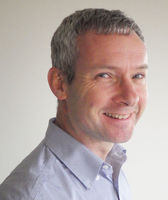
Dr Mark Barnes
Radiologist
-

Dr Damon Blair
Radiologist
-
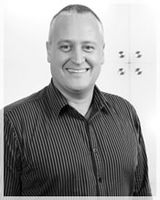
Dr Glenn Coltman
Radiologist
-

Dr Gavin Davis
Radiologist
-
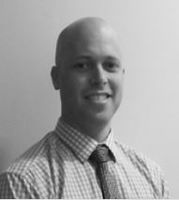
Dr Rory Davis
Radiologist
-

Dr John Dumble
Radiologist
-

Dr Leigh Harvey
Radiologist
-

Dr Rebecca Hughes
Radiologist
-

Dr Andrew Klava
Radiologist
-
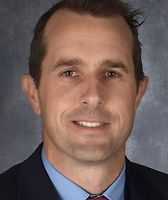
Dr Benjamin Moon
Radiologist
-
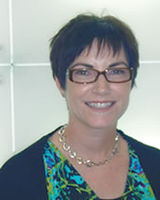
Dr Rosanne Newman
Radiologist
-

Dr Aideen Ni Mhuineachain
Radiologist
-

Dr Diane Sommerville
Radiologist
-

Dr Michael Swarbrick
Radiologist
Ages
Adult / Pakeke, Child / Tamariki, Older adult / Kaumātua, Youth / Rangatahi
How do I access this service?
Referral
Referral Expectations
Fees and Charges Description
We are an affiliated provider with Southern Cross Health Insurance and NIB Healthcare.
Hours
8:00 AM to 4:30 PM.
| Mon – Fri | 8:00 AM – 4:30 PM |
|---|
Languages Spoken
English
Services Provided
With CT you can differentiate many more things than with a normal X-ray. A CT image is created by using an X-ray beam, which is sent through the body from different angles, and by using a complicated mathematical process the computer of the CT is able to produce an image. This allows cross-sectional images of the body without cutting it open. The CT is used to view all body structures but especially soft tissue such as body organs (heart, lungs, liver etc.). What to expect? You will have all metal objects removed from your body. You will lie down on a narrow padded moveable table that will be slid into the scanner, through a circular opening. You will feel nothing while the scan is in progress, but some people can feel slightly claustrophobic or closed in, whilst inside the scanner. You will be asked to remain still and hold your breath on command. There are staff present, but they will not necessarily remain in the room, but will speak with you via an intercom system and will be viewing the procedure constantly through a windowed control room, from where they will run the scanner. Some procedures will require Contrast Medium. Contrast medium is a substance that makes the image of the CT or MRI clearer. Contrast medium can be given by mouth, rectally, or by injection into the bloodstream.v The scan time will vary depending on the type of examination required, but as a rule it will take around 30 minutes. Read more about having a CT scan at I-MED Radiology here
With CT you can differentiate many more things than with a normal X-ray. A CT image is created by using an X-ray beam, which is sent through the body from different angles, and by using a complicated mathematical process the computer of the CT is able to produce an image. This allows cross-sectional images of the body without cutting it open. The CT is used to view all body structures but especially soft tissue such as body organs (heart, lungs, liver etc.). What to expect? You will have all metal objects removed from your body. You will lie down on a narrow padded moveable table that will be slid into the scanner, through a circular opening. You will feel nothing while the scan is in progress, but some people can feel slightly claustrophobic or closed in, whilst inside the scanner. You will be asked to remain still and hold your breath on command. There are staff present, but they will not necessarily remain in the room, but will speak with you via an intercom system and will be viewing the procedure constantly through a windowed control room, from where they will run the scanner. Some procedures will require Contrast Medium. Contrast medium is a substance that makes the image of the CT or MRI clearer. Contrast medium can be given by mouth, rectally, or by injection into the bloodstream.v The scan time will vary depending on the type of examination required, but as a rule it will take around 30 minutes. Read more about having a CT scan at I-MED Radiology here
With CT you can differentiate many more things than with a normal X-ray. A CT image is created by using an X-ray beam, which is sent through the body from different angles, and by using a complicated mathematical process the computer of the CT is able to produce an image. This allows cross-sectional images of the body without cutting it open. The CT is used to view all body structures but especially soft tissue such as body organs (heart, lungs, liver etc.).
What to expect?
You will have all metal objects removed from your body. You will lie down on a narrow padded moveable table that will be slid into the scanner, through a circular opening.
You will feel nothing while the scan is in progress, but some people can feel slightly claustrophobic or closed in, whilst inside the scanner. You will be asked to remain still and hold your breath on command. There are staff present, but they will not necessarily remain in the room, but will speak with you via an intercom system and will be viewing the procedure constantly through a windowed control room, from where they will run the scanner.
Some procedures will require Contrast Medium. Contrast medium is a substance that makes the image of the CT or MRI clearer. Contrast medium can be given by mouth, rectally, or by injection into the bloodstream.v
The scan time will vary depending on the type of examination required, but as a rule it will take around 30 minutes.
Read more about having a CT scan at I-MED Radiology here
A combination of two types of scans: PET (Positron Emission Tomography) and CT (Computed Tomography). The PET scan shows how organs and tissues are working, while the CT scan shows detailed pictures of their structure. Together, they help doctors diagnose and monitor diseases like cancer. Read more about having a PET-CT scan at I-MED Radiology here
A combination of two types of scans: PET (Positron Emission Tomography) and CT (Computed Tomography). The PET scan shows how organs and tissues are working, while the CT scan shows detailed pictures of their structure. Together, they help doctors diagnose and monitor diseases like cancer. Read more about having a PET-CT scan at I-MED Radiology here
A combination of two types of scans: PET (Positron Emission Tomography) and CT (Computed Tomography). The PET scan shows how organs and tissues are working, while the CT scan shows detailed pictures of their structure. Together, they help doctors diagnose and monitor diseases like cancer.
Read more about having a PET-CT scan at I-MED Radiology here
Image guided procedures in radiology use imaging technologies such as ultrasound, CT, or MRI to help doctors perform minimally invasive procedures such as biopsies and injections. The imaging allows doctors to be more precise, which often means less pain and faster recovery for the patient. Read more about having image-guided injections at I-MED Radiology here
Image guided procedures in radiology use imaging technologies such as ultrasound, CT, or MRI to help doctors perform minimally invasive procedures such as biopsies and injections. The imaging allows doctors to be more precise, which often means less pain and faster recovery for the patient. Read more about having image-guided injections at I-MED Radiology here
Image guided procedures in radiology use imaging technologies such as ultrasound, CT, or MRI to help doctors perform minimally invasive procedures such as biopsies and injections. The imaging allows doctors to be more precise, which often means less pain and faster recovery for the patient.
Read more about having image-guided injections at I-MED Radiology here
Online Booking URL
Public Transport
Closest bus stop is on 6 Thackeray Street. Bus routes 24, 26, C.
Parking
Pharmacy
Find your nearest pharmacy here
Contact Details
8:00 AM to 4:30 PM.
-
Phone
0800 4 273 828
-
Fax
(07) 839 5780
Email
Website
Anglesea Medical Complex (Access via Gate 3), 54 Tristram Street
Hamilton Central
Hamilton City
Waikato 3204
Street Address
Anglesea Medical Complex (Access via Gate 3), 54 Tristram Street
Hamilton Central
Hamilton City
Waikato 3204
Was this page helpful?
This page was last updated at 11:20AM on October 17, 2025. This information is reviewed and edited by I-MED Radiology - Anglesea Medical Complex.