
Central Auckland, East Auckland, North Auckland, South Auckland, West Auckland > Private Hospitals & Specialists > Allevia Health >
Allevia Renal Colic Clinic
Private Service, Urology, Nephrology
Description
The Renal Colic Clinic was developed in partnership between Allevia Health and Urology Institute specialists from OneSixOne Medical Group.
An integrated, one-stop clinic for patients experiencing flank pain caused by a blockage in their urinary tract (renal colic).
Renal colic is a sudden, severe pain felt around the lower back area, known as flank pain. It is often described by patients as the worst pain they have ever experienced. At the Renal Colic Clinic, our expert urologists provide rapid diagnosis and a tailored treatment plan within days of referral, supporting better patient outcomes and faster relief.
Your patients will benefit from:
- Walk-in service at Allevia Radiology
- No appointment needed for urgent care - reference the Renal Colic Clinic
- Urgent reporting
- Available at Allevia Radiology Epsom, Botany, and Pukekohe branches
- Streamlined services
- Patients will seamlessly transition from a non-contrast CT scan to specialist consultations to treatment, if required, to reduce delays and fragmented care.
- Timely access to treatment
- Early detection and intervention
- Treatment available within a few days of referral
- Wrap-around support
- Patients are offered a post-treatment consultation with a renal physician and dietitian to prevent ongoing renal colic
Consultants
Note: Please note below that some people are not available at all locations.
-

Mr Jason Du
Urologist
Available at 161 Gillies Avenue, Auckland, Allevia Hospital Epsom, 98 Mountain Road, Epsom, Auckland, Allevia Hospital Ascot, 90 Green Lane East, Remuera, Auckland
-

Dr Eva Fong
Urologist
Available at 161 Gillies Avenue, Auckland, Allevia Hospital Epsom, 98 Mountain Road, Epsom, Auckland, Allevia Hospital Ascot, 90 Green Lane East, Remuera, Auckland
-

Mr Madhu Koya
Urologist
Available at 161 Gillies Avenue, Auckland, Allevia Hospital Epsom, 98 Mountain Road, Epsom, Auckland
-

Mr Andrew Lienert
Urologist
Available at 161 Gillies Avenue, Auckland, Allevia Hospital Ascot, 90 Green Lane East, Remuera, Auckland
-

Dr Sum Sum Lo
Urologist
Available at 161 Gillies Avenue, Auckland, Allevia Hospital Epsom, 98 Mountain Road, Epsom, Auckland, Allevia Hospital Ascot, 90 Green Lane East, Remuera, Auckland
-
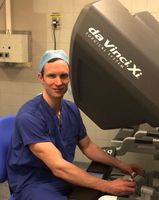
Mr Simon van Rij
Urologist
Available at 161 Gillies Avenue, Auckland, Allevia Hospital Ascot, 90 Green Lane East, Remuera, Auckland
-

Dr Andrew Williams
Urologist
Available at 161 Gillies Avenue, Auckland, Allevia Hospital Epsom, 98 Mountain Road, Epsom, Auckland, Allevia Hospital Ascot, 90 Green Lane East, Remuera, Auckland
-

Dr Nadya York
Urologist
Available at 161 Gillies Avenue, Auckland, Allevia Hospital Ascot, 90 Green Lane East, Remuera, Auckland
Ages
Adult / Pakeke, Older adult / Kaumātua, Youth / Rangatahi
How do I access this service?
Referral
Referral Expectations
Patients can be referred directly to the Renal Colic Clinic at OneSixOne Medical Group.
Alternatively, patients can walk-in to Allevia Radiology (Epsom, Botany or Pukekohe) for a CT scan, without an appointment. Patients must reference the Renal Colic Clinic at Allevia Radiology reception.
Fees and Charges Categorisation
Fees apply
Languages Spoken
English
Services Provided
You will undergo a CT scan specific for evaluation of the urinary tract, also referred to as “CT-IVU (Intravenous Urography)” which will allow us to evaluate the kidneys and ureters (the ducts which carry urine from the kidneys to the bladder). Once you have changed into your gown, you will have a cannula inserted into a vein in your arm. A CT radiographer will then inject a small amount of intravenous contrast fluid into your vein. This injection may make you feel hot and flushed but this will quickly pass within a few minutes. After about 15 minutes, you will proceed to have a CT scan and a second injection of intravenous contrast is given. The contrast will be excreted into your urine and thus outline the urinary tract. A Radiologist will view your CT images and create a report for the Urologist.
You will undergo a CT scan specific for evaluation of the urinary tract, also referred to as “CT-IVU (Intravenous Urography)” which will allow us to evaluate the kidneys and ureters (the ducts which carry urine from the kidneys to the bladder). Once you have changed into your gown, you will have a cannula inserted into a vein in your arm. A CT radiographer will then inject a small amount of intravenous contrast fluid into your vein. This injection may make you feel hot and flushed but this will quickly pass within a few minutes. After about 15 minutes, you will proceed to have a CT scan and a second injection of intravenous contrast is given. The contrast will be excreted into your urine and thus outline the urinary tract. A Radiologist will view your CT images and create a report for the Urologist.
You will undergo a CT scan specific for evaluation of the urinary tract, also referred to as “CT-IVU (Intravenous Urography)” which will allow us to evaluate the kidneys and ureters (the ducts which carry urine from the kidneys to the bladder).
Once you have changed into your gown, you will have a cannula inserted into a vein in your arm. A CT radiographer will then inject a small amount of intravenous contrast fluid into your vein. This injection may make you feel hot and flushed but this will quickly pass within a few minutes.
After about 15 minutes, you will proceed to have a CT scan and a second injection of intravenous contrast is given. The contrast will be excreted into your urine and thus outline the urinary tract.
A Radiologist will view your CT images and create a report for the Urologist.
This test is an examination of the bladder with a small flexible camera lasting a few minutes. It is only mildly uncomfortable and is generally well tolerated by most people. During the flexible cystoscopy the Urologist will insert the small camera into your bladder via the urethra (the water pipe leading to the bladder). A local anaesthetic jelly will be used to numb and lubricate the urethra to make passage of the scope into the bladder as comfortable as possible. Attached to the scope is a telescopic lens, a light source and some sterile water to fill your bladder so the lining can be inspected. Once the examination is completed the scope will be removed and you will be able to walk to the toilet and pass the fluid that has been used to fill your bladder, just as if you were passing urine.
This test is an examination of the bladder with a small flexible camera lasting a few minutes. It is only mildly uncomfortable and is generally well tolerated by most people. During the flexible cystoscopy the Urologist will insert the small camera into your bladder via the urethra (the water pipe leading to the bladder). A local anaesthetic jelly will be used to numb and lubricate the urethra to make passage of the scope into the bladder as comfortable as possible. Attached to the scope is a telescopic lens, a light source and some sterile water to fill your bladder so the lining can be inspected. Once the examination is completed the scope will be removed and you will be able to walk to the toilet and pass the fluid that has been used to fill your bladder, just as if you were passing urine.
This test is an examination of the bladder with a small flexible camera lasting a few minutes. It is only mildly uncomfortable and is generally well tolerated by most people.
During the flexible cystoscopy the Urologist will insert the small camera into your bladder via the urethra (the water pipe leading to the bladder). A local anaesthetic jelly will be used to numb and lubricate the urethra to make passage of the scope into the bladder as comfortable as possible. Attached to the scope is a telescopic lens, a light source and some sterile water to fill your bladder so the lining can be inspected. Once the examination is completed the scope will be removed and you will be able to walk to the toilet and pass the fluid that has been used to fill your bladder, just as if you were passing urine.
This term refers to stones in the urinary system. They form in the kidneys but can be found anywhere in the urinary system. They vary in size and the amount of pain they cause. Many of these stones can pass through without help but some require medical intervention. Extracorporeal shockwave lithotripsy (ESWL) is the most frequently used procedure for the treatment of kidney stones. In ESWL, shock waves that are created outside the body travel through the skin and body tissues until they hit the denser stones. The stones break down into very small particles and are easily passed through the urinary tract in the urine.
This term refers to stones in the urinary system. They form in the kidneys but can be found anywhere in the urinary system. They vary in size and the amount of pain they cause. Many of these stones can pass through without help but some require medical intervention. Extracorporeal shockwave lithotripsy (ESWL) is the most frequently used procedure for the treatment of kidney stones. In ESWL, shock waves that are created outside the body travel through the skin and body tissues until they hit the denser stones. The stones break down into very small particles and are easily passed through the urinary tract in the urine.
This term refers to stones in the urinary system. They form in the kidneys but can be found anywhere in the urinary system. They vary in size and the amount of pain they cause. Many of these stones can pass through without help but some require medical intervention.
Extracorporeal shockwave lithotripsy (ESWL) is the most frequently used procedure for the treatment of kidney stones. In ESWL, shock waves that are created outside the body travel through the skin and body tissues until they hit the denser stones. The stones break down into very small particles and are easily passed through the urinary tract in the urine.
A thin wire is inserted into your lower back and guided using x-ray imaging to your kidney. A small incision (cut) is then made on your back and a narrow tube is inserted and follows the guide wire to the kidney. The kidney stone(s) is then removed or broken up.
A thin wire is inserted into your lower back and guided using x-ray imaging to your kidney. A small incision (cut) is then made on your back and a narrow tube is inserted and follows the guide wire to the kidney. The kidney stone(s) is then removed or broken up.
A thin wire is inserted into your lower back and guided using x-ray imaging to your kidney. A small incision (cut) is then made on your back and a narrow tube is inserted and follows the guide wire to the kidney. The kidney stone(s) is then removed or broken up.
A non-invasive, outpatient (same day) procedure using external shockwaves for small, softer kidney stones.
A non-invasive, outpatient (same day) procedure using external shockwaves for small, softer kidney stones.
A non-invasive, outpatient (same day) procedure using external shockwaves for small, softer kidney stones.
An incision (cut) is made in the penis and the narrowed part of the urethra (the tube that carries urine to the outside of your body) is removed and the urethra rejoined. In balloon urethroplasty, a thin tube with a balloon attached is inserted into the opening of the penis. When it reaches the narrowed part of the urethra, the balloon is inflated, thus widening the urethra.
An incision (cut) is made in the penis and the narrowed part of the urethra (the tube that carries urine to the outside of your body) is removed and the urethra rejoined. In balloon urethroplasty, a thin tube with a balloon attached is inserted into the opening of the penis. When it reaches the narrowed part of the urethra, the balloon is inflated, thus widening the urethra.
An incision (cut) is made in the penis and the narrowed part of the urethra (the tube that carries urine to the outside of your body) is removed and the urethra rejoined. In balloon urethroplasty, a thin tube with a balloon attached is inserted into the opening of the penis. When it reaches the narrowed part of the urethra, the balloon is inflated, thus widening the urethra.
A minimally invasive surgery that is commonly used to remove smaller stones in the kidney or upper ureter. Performed under general anaesthetic where a thin tube with a camera and light is inserted through your urethra. Laser from the tube is used to break up the stone into small pieces.
A minimally invasive surgery that is commonly used to remove smaller stones in the kidney or upper ureter. Performed under general anaesthetic where a thin tube with a camera and light is inserted through your urethra. Laser from the tube is used to break up the stone into small pieces.
A minimally invasive surgery that is commonly used to remove smaller stones in the kidney or upper ureter. Performed under general anaesthetic where a thin tube with a camera and light is inserted through your urethra. Laser from the tube is used to break up the stone into small pieces.
Urinalysis is a test that examines the content of urine for abnormal substances such as protein or signs of infection. This test involves urinating into a special container and leaving the sample to be studied.
Urinalysis is a test that examines the content of urine for abnormal substances such as protein or signs of infection. This test involves urinating into a special container and leaving the sample to be studied.
Urinalysis is a test that examines the content of urine for abnormal substances such as protein or signs of infection. This test involves urinating into a special container and leaving the sample to be studied.
Disability Assistance
Mobility parking space, Wheelchair access
Refreshments
OneSixOne: Tea and coffee are provided on request, and filtered water is provided for patients in the waiting room.
Public Transport
The Auckland Transport Journey Planner will help you to plan your journey.
Parking
OneSixOne: Free parking is provided at the front of the practice.
Pharmacy
Find your nearest pharmacy here
Website

Contact Details
Eastcare, 260 Botany Road, Golflands, Auckland
East Auckland
-
Phone
(09) 623 0161
Healthlink EDI
tk161uro
Email
Website
Contact us on the above number or email for appointments and referrals.
Reference the “Renal Colic Clinic” when making a referral.
Alternatively, patients may also walk into Allevia Radiology (Epsom, Botany or Pukekohe) without an appointment.
260 Botany Road
Golflands
Auckland 2013
Street Address
260 Botany Road
Golflands
Auckland 2013
161 Gillies Avenue, Auckland
Central Auckland
-
Phone
(09) 623 0161
Healthlink EDI
tk161uro
Email
Website
Allevia Hospital Epsom, 98 Mountain Road, Epsom, Auckland
Central Auckland
-
Phone
(09) 623 0161
Healthlink EDI
tk161uro
Email
Website
Allevia Hospital Ascot, 90 Green Lane East, Remuera, Auckland
Central Auckland
-
Phone
(09) 623 0161
Healthlink EDI
tk161uro
Email
Website
Franklin Hospital
South Auckland
-
Phone
(09) 623 0161
Healthlink EDI
tk161uro
Email
Website
Was this page helpful?
This page was last updated at 2:48PM on March 25, 2026. This information is reviewed and edited by Allevia Renal Colic Clinic.