Central Auckland > Public Hospital Services > Starship Child Health >
Starship Paediatric Respiratory Services
Public Service, Respiratory, Paediatrics
Description
- lung damage after premature birth
- congenital lung and airway problems
- severe pneumonia and its complications
- chronic scarring of the lung (bronchiectasis)
- cystic fibrosis
- complex immunological disorders affecting the lung
- disorders of breathing during sleep
- those who require long term mechanical support for their breathing.
Staff
| Respiratory Laboratory | |
| Simon Edmons | Charge Physiologist |
| Simone Chan | Physiologist |
| Karen Coertze | Senior Physiologist |
| Pius Ersando | Physiologist |
| Benjamin Guzman | Physiologist |
| Jemima Jansen | Physiologist |
| Brooke Kelly | Senior Physiologist |
| Craig Parker | Physiologist |
| Anthony Parsons | Physiologist |
| Anita Trudgen | Physiologist |
| Raksha Uthaiah | Physiologist |
| David Wood | Physiologist |
| Simon Waller | Long-term Ventilation Nurse Specialist |
| Bronchiectasis Clinic | |
| Kathy Rose | Nurse Specialist |
| Katelyn Allen | Physiotherapist |
| Cystic Fibrosis Clinic | |
| Claire Calvert | Nurse Specialist |
| Rebecca Scoones | Physiotherapist |
| Jenny Heyward | Dietitian |
| Administration | |
| Joelle McCusker | Respiratory Dept Team Support and Clinical Administration Clerk |
Consultants
-
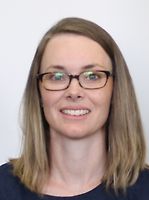
Dr Alana Ainsworth
Respiratory Paediatrician
-

Assoc Professor Cass Byrnes
Respiratory Paediatrician
-
Dr Fei Dy
Respiratory Paediatrician
-
Dr David McNamara
Respiratory Paediatrician and Sleep Specialist, Clinical Leader
-
Dr Anna Mulholland
Respiratory Paediatrician, Sleep Specialist
-
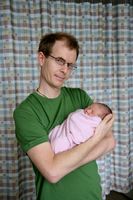
Dr Jacob Twiss
Respiratory Paediatrician, Sleep Specialist
-
Dr Julian Vyas
Respiratory Paediatrician
Ages
Child / Tamariki, Youth / Rangatahi
Referral Expectations
The department provides specialist respiratory paediatric care for children across New Zealand with severe, complex or rare problems. For the vast majority of children we see, this care is provided in conjunction with a local general paediatric specialist. We usually do not accept referrals from a general practitioner (GP), and require that a child has been initially assessed by a local general paediatrician. However, there are some circumstances that mean a direct referral from a GP is appropriate (e.g. if a child moves into the area with a known diagnosis of cystic fibrosis). If there is thought to be any unusual circumstances to bypass an initial general paediatrician referral the GP should write to the Respiratory Department setting out the previously established diagnosis.
Some of the reasons for referral to a respiratory paediatrician are listed below. Follow the associated links to kidshealth.org.nz for further information.
- Chronic Lung Disease of Prematurity (CLD)
- Cystic Fibrosis (CF)
- Severe asthma
- Bronchiectasis
- Sleep related breathing disorders
- Congenital lung / breathing problems
- Chronic pulmonary aspiration syndrome
- Interstitial lung disease
- Bronchiolitis obliterans
- Lung biopsy
- Consideration for lung transplant (see kidshealth.org)
- Pleural Effusion / emphysema
- Recurrent pneumothorax
- coughing most days even when the child doesn’t have a temperature or runny nose
- regularly coughing up green or yellow sputum (phlegm or mucus)
- wheezing even when well, or wheezing that doesn’t go away after taking Ventolin
- exercise ability reduced by shortness of breath, when compared to others of the same age
- increasing shortness of breath over the last few weeks or months.
- Any letters or reports from your doctor or another hospital
- Any X-Rays, CT or MRI films and reports
- All medicines your child is currently taking including herbal and natural remedies
- Your child's pharmaceutical entitlement card.
Hours
Outpatient Clinics for the Paediatric Respiratory service are held on the following days and times:
- Cystic Fibrosis clinic: Wednesday mornings.
- Sleep clinic: Wednesday mornings, Thursday afternoons, Friday Mornings
- Bronchiectasis clinic Tuesday mornings
- General Respiratory clinic: Thursday afternoons or Friday mornings
Procedures / Treatments
From 5 or 6 years old, children do a lung function test (spirometry) when they attend clinic. This is a test to see how well the air flows out of the lungs. One of the specialist physiologists at the clinic will carefully explain the test to you and your child at the time. The results of the test will be known to the doctor when you are seen in the clinic, and can help the doctor in making a diagnosis of your child’s problem, or how to alter treatment to give your child maximum benefit.
From 5 or 6 years old, children do a lung function test (spirometry) when they attend clinic. This is a test to see how well the air flows out of the lungs. One of the specialist physiologists at the clinic will carefully explain the test to you and your child at the time. The results of the test will be known to the doctor when you are seen in the clinic, and can help the doctor in making a diagnosis of your child’s problem, or how to alter treatment to give your child maximum benefit.
Service types: Lung function tests (Spirometry | Peak flow meter).
It is very likely your child will have already had chest X-Rays before being seen. Depending on where you live, these X-Rays may be able to be seen on the computer when you are seen in the clinic. Sometimes it can be helpful to repeat an X-Ray at the time of the clinic. This might even mean doing one when your child is well, to show what the lungs look like “at their best”. The doctor in the clinic will explain to you if an X-Ray is necessary, and why. The X-Ray can be discussed with you later in the clinic.
It is very likely your child will have already had chest X-Rays before being seen. Depending on where you live, these X-Rays may be able to be seen on the computer when you are seen in the clinic. Sometimes it can be helpful to repeat an X-Ray at the time of the clinic. This might even mean doing one when your child is well, to show what the lungs look like “at their best”. The doctor in the clinic will explain to you if an X-Ray is necessary, and why. The X-Ray can be discussed with you later in the clinic.
Service types: Chest x-ray.
It is very likely your child will have already had chest X-Rays before being seen. Depending on where you live, these X-Rays may be able to be seen on the computer when you are seen in the clinic. Sometimes it can be helpful to repeat an X-Ray at the time of the clinic. This might even mean doing one when your child is well, to show what the lungs look like “at their best”. The doctor in the clinic will explain to you if an X-Ray is necessary, and why. The X-Ray can be discussed with you later in the clinic.
Sometimes more detail is needed than a chest xray can show. This is the case if there is concern your child may have a more complicated lung problem. In these cases, a CT scan (CAT scan) of the chest is requested. This can’t be done at the time of the clinic, but will be requested for a later date. The test requires that the child lies very still for approximately 3-5 minutes at a time, and can hold their breath for 20 seconds. If this is difficult for your child the doctors may suggest that the scan be done under a general anaesthetic. This is to make sure the picture from the scan is of the best quality to give as much information about your child’s chest as possible.
Sometimes more detail is needed than a chest xray can show. This is the case if there is concern your child may have a more complicated lung problem. In these cases, a CT scan (CAT scan) of the chest is requested. This can’t be done at the time of the clinic, but will be requested for a later date. The test requires that the child lies very still for approximately 3-5 minutes at a time, and can hold their breath for 20 seconds. If this is difficult for your child the doctors may suggest that the scan be done under a general anaesthetic. This is to make sure the picture from the scan is of the best quality to give as much information about your child’s chest as possible.
Service types: Chest computer tomography (CT) scan.
Sometimes more detail is needed than a chest xray can show. This is the case if there is concern your child may have a more complicated lung problem. In these cases, a CT scan (CAT scan) of the chest is requested. This can’t be done at the time of the clinic, but will be requested for a later date. The test requires that the child lies very still for approximately 3-5 minutes at a time, and can hold their breath for 20 seconds. If this is difficult for your child the doctors may suggest that the scan be done under a general anaesthetic. This is to make sure the picture from the scan is of the best quality to give as much information about your child’s chest as possible.
If your child regularly coughs up sputum (also called mucus or phlegm), the doctors may want to take a sample of this to see if any particular organisms are growing in it. For those children who cannot cough up phlegm there are other methods to get a sample including taking a swab from the nose, or from the back of the throat. These swabs are a little unpleasant for younger children, but take only seconds to perform. There are no long lasting ill effects from swabbing. The result from the swab takes approximately one week to come back to the doctors.
If your child regularly coughs up sputum (also called mucus or phlegm), the doctors may want to take a sample of this to see if any particular organisms are growing in it. For those children who cannot cough up phlegm there are other methods to get a sample including taking a swab from the nose, or from the back of the throat. These swabs are a little unpleasant for younger children, but take only seconds to perform. There are no long lasting ill effects from swabbing. The result from the swab takes approximately one week to come back to the doctors.
If your child regularly coughs up sputum (also called mucus or phlegm), the doctors may want to take a sample of this to see if any particular organisms are growing in it. For those children who cannot cough up phlegm there are other methods to get a sample including taking a swab from the nose, or from the back of the throat. These swabs are a little unpleasant for younger children, but take only seconds to perform. There are no long lasting ill effects from swabbing. The result from the swab takes approximately one week to come back to the doctors.
Sometimes, it may be recommended that a flexible bronchoscopy is performed. This is a test where a small ‘scope (camera on a guidable arm) is passed into your child’s airways to actually see what the lungs look like. This test allows the doctors to see if there are any poorly grown, or misshapen airways; any airways squashed (e.g. by glands); or if the airways look inflamed. It is usual to perform a “lavage” at the same time as the bronchoscopy. This is a test where an amount of saline (salt water) is washed into the lungs, and immediately sucked back out again. In doing this we can get better samples of mucus from which we can look for organisms, and sometimes also look for evidence of other, more complicated problems. The lavage doesn’t cause any serious or long term side effects. If a bronchoscopy (with or without lavage) is thought to help towards your child’s care, your doctor will discuss this with you. You can find more information using the “bronchoscopy” link, above.
Sometimes, it may be recommended that a flexible bronchoscopy is performed. This is a test where a small ‘scope (camera on a guidable arm) is passed into your child’s airways to actually see what the lungs look like. This test allows the doctors to see if there are any poorly grown, or misshapen airways; any airways squashed (e.g. by glands); or if the airways look inflamed. It is usual to perform a “lavage” at the same time as the bronchoscopy. This is a test where an amount of saline (salt water) is washed into the lungs, and immediately sucked back out again. In doing this we can get better samples of mucus from which we can look for organisms, and sometimes also look for evidence of other, more complicated problems. The lavage doesn’t cause any serious or long term side effects. If a bronchoscopy (with or without lavage) is thought to help towards your child’s care, your doctor will discuss this with you. You can find more information using the “bronchoscopy” link, above.
Service types: Bronchoscopy.
Sometimes, it may be recommended that a flexible bronchoscopy is performed. This is a test where a small ‘scope (camera on a guidable arm) is passed into your child’s airways to actually see what the lungs look like. This test allows the doctors to see if there are any poorly grown, or misshapen airways; any airways squashed (e.g. by glands); or if the airways look inflamed. It is usual to perform a “lavage” at the same time as the bronchoscopy. This is a test where an amount of saline (salt water) is washed into the lungs, and immediately sucked back out again. In doing this we can get better samples of mucus from which we can look for organisms, and sometimes also look for evidence of other, more complicated problems. The lavage doesn’t cause any serious or long term side effects. If a bronchoscopy (with or without lavage) is thought to help towards your child’s care, your doctor will discuss this with you. You can find more information using the “bronchoscopy” link, above.
Some children can have a problem of breathing that is more severe when they are asleep. In order to understand this better, it may be necessary to get your child to have a “Sleep Study”. This term covers a range of tests that are all done during sleep. The most basic test (overnight pulse oxymetry) is usually able to be done by your local community children’s nursing team, at home. The results may then need to be forwarded to us at Starship for comment. Other, more sophisticated, sleep tests can only be done in hospital, at present. This would require your child and an accompanying adult to be admitted for an overnight stay, when the test equipment would be set up, and a recording obtained. In most cases a single night’s stay is all that is needed. The results from these more detailed tests are not available on the day after the readings are taken, but are usually back by a couple of weeks after the test is done. Some children without complicated medical needs will have their sleep study performed at the New Zealand Respiratory and Sleep Institute. Even though this is not on the Starship Campus, these sleep studies are reported by the Starship sleep specialists in the same way as studies done at SCH are.
Some children can have a problem of breathing that is more severe when they are asleep. In order to understand this better, it may be necessary to get your child to have a “Sleep Study”. This term covers a range of tests that are all done during sleep. The most basic test (overnight pulse oxymetry) is usually able to be done by your local community children’s nursing team, at home. The results may then need to be forwarded to us at Starship for comment. Other, more sophisticated, sleep tests can only be done in hospital, at present. This would require your child and an accompanying adult to be admitted for an overnight stay, when the test equipment would be set up, and a recording obtained. In most cases a single night’s stay is all that is needed. The results from these more detailed tests are not available on the day after the readings are taken, but are usually back by a couple of weeks after the test is done. Some children without complicated medical needs will have their sleep study performed at the New Zealand Respiratory and Sleep Institute. Even though this is not on the Starship Campus, these sleep studies are reported by the Starship sleep specialists in the same way as studies done at SCH are.
Service types: Sleep disorders | Sleep studies.
Some children can have a problem of breathing that is more severe when they are asleep. In order to understand this better, it may be necessary to get your child to have a “Sleep Study”. This term covers a range of tests that are all done during sleep. The most basic test (overnight pulse oxymetry) is usually able to be done by your local community children’s nursing team, at home. The results may then need to be forwarded to us at Starship for comment. Other, more sophisticated, sleep tests can only be done in hospital, at present. This would require your child and an accompanying adult to be admitted for an overnight stay, when the test equipment would be set up, and a recording obtained. In most cases a single night’s stay is all that is needed. The results from these more detailed tests are not available on the day after the readings are taken, but are usually back by a couple of weeks after the test is done. Some children without complicated medical needs will have their sleep study performed at the New Zealand Respiratory and Sleep Institute. Even though this is not on the Starship Campus, these sleep studies are reported by the Starship sleep specialists in the same way as studies done at SCH are.
Contact Details
Starship Child Health, Central Auckland
Central Auckland
Respiratory Department Team Support
Phone
(09) 307 4949 ext 22245
Respiratory Clinic, Bronchoscopy and Sleep Study Scheduler
Phone: (09) 307 4949 ext 22491
Email: PaedRespiratoryDept@adhb.govt.nz
2 Park Road
Grafton
Auckland 1023
Street Address
2 Park Road
Grafton
Auckland 1023
Postal Address
Starship Child Health
Private Bag 92 024
Auckland Mail Centre
Auckland 1142
New Zealand
Was this page helpful?
This page was last updated at 2:20PM on April 1, 2026. This information is reviewed and edited by Starship Paediatric Respiratory Services.