
Central Auckland, South Auckland > Specialised Primary Health Care >
Delphi Clinic
Vein Treatment Service
Today
8:30 AM to 5:00 PM.
Description
Delphi Clinic is a dedicated vein clinic specialising in the treatment of varicose and spider veins. We provide the highest quality, non-surgical and up-to-date treatment for vein conditions. Our treatments are highly effective and require little to no downtime, allowing you to get back to your life seamlessly.
We are passionate about helping patients with their vein disease and welcome the opportunity to meet you in person to discuss your concerns and to find a treatment plan that’s suitable for you.
Our services include treatment for:
- varicose veins
- spider veins
- ulcerations/vein ulcers
- venous eczema
- reticular veins
- lipodermatosclerosis
- swelling in the legs. oedema
Staff
Dr Zach Kidman employs skilled and personable sonographers who have years of industry experience in identifying mild to serious vein conditions.
Doctors
-
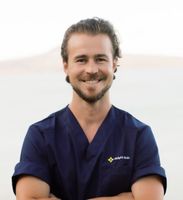
Dr Zach Kidman
Phlebologist
How do I access this service?
Referral
Clinician - or self-referral
For referring doctors: what to expect and referral form here
Contact us
- Mob: 021 795 744
- Email:
For patients: see our frequently asked questions (FAQ) here
Fees and Charges Description
We are a Southern Cross Affiliated Provider and covered by all major insurance companies.
Hours
8:30 AM to 5:00 PM.
| Mon – Fri | 8:30 AM – 5:00 PM |
|---|
Services Provided
Varicose veins are swollen and enlarged veins and they most commonly affect the legs causing discomfort and pain. The can also cause patients' significant distress by their appearance, in some cases prohibiting their confidence in day-to-day activities. Statistically they are more likely to occur in women than in men and they do tend to run in families. In fact, if you have one parent who suffers from varicose veins, there is a 40 percent chance you may develop them. They are often blue or purple in appearance and are most likely to become apparent between 30 and 60 years of age. Pregnancy can increase your risk for varicose veins. Other risk factors include jobs that have you standing for long periods of time (retail positions, cabin crew, playing sports) where gravity increases the strain on your veins. How do they occur? Varicose veins are caused when the valves in your legs responsible for blood flow stop working correctly. Their insufficiency allows blood to back flow which results in blood pooling in your veins, causing them to stretch and increase in size. They most commonly occur in the superficial veins in your legs, specifically affecting vein junctions (where different veins join) and they are commonly found in the upper thigh, behind the knee and in the calf muscle. Women can experience varicose veins in their groin due to pregnancy. Over time, if varicose veins are left untreated, they can cause further complications including the development of varicose ulcers - where the skin struggles to heal. Patients may also suffer increasing appearance concerns such as dark pigmentation forming over their skin. Further complications of venous insufficiency can occur including the development of Deep Vein Thrombosis (DVT) whereby a clot in the leg develops - while this isn't directly linked to varicose veins, it is a significant complication of vein insufficiency to be aware of.
Varicose veins are swollen and enlarged veins and they most commonly affect the legs causing discomfort and pain. The can also cause patients' significant distress by their appearance, in some cases prohibiting their confidence in day-to-day activities. Statistically they are more likely to occur in women than in men and they do tend to run in families. In fact, if you have one parent who suffers from varicose veins, there is a 40 percent chance you may develop them. They are often blue or purple in appearance and are most likely to become apparent between 30 and 60 years of age. Pregnancy can increase your risk for varicose veins. Other risk factors include jobs that have you standing for long periods of time (retail positions, cabin crew, playing sports) where gravity increases the strain on your veins. How do they occur? Varicose veins are caused when the valves in your legs responsible for blood flow stop working correctly. Their insufficiency allows blood to back flow which results in blood pooling in your veins, causing them to stretch and increase in size. They most commonly occur in the superficial veins in your legs, specifically affecting vein junctions (where different veins join) and they are commonly found in the upper thigh, behind the knee and in the calf muscle. Women can experience varicose veins in their groin due to pregnancy. Over time, if varicose veins are left untreated, they can cause further complications including the development of varicose ulcers - where the skin struggles to heal. Patients may also suffer increasing appearance concerns such as dark pigmentation forming over their skin. Further complications of venous insufficiency can occur including the development of Deep Vein Thrombosis (DVT) whereby a clot in the leg develops - while this isn't directly linked to varicose veins, it is a significant complication of vein insufficiency to be aware of.
Service types: Varicose veins | vein treatment.
Varicose veins are swollen and enlarged veins and they most commonly affect the legs causing discomfort and pain. The can also cause patients' significant distress by their appearance, in some cases prohibiting their confidence in day-to-day activities. Statistically they are more likely to occur in women than in men and they do tend to run in families. In fact, if you have one parent who suffers from varicose veins, there is a 40 percent chance you may develop them. They are often blue or purple in appearance and are most likely to become apparent between 30 and 60 years of age. Pregnancy can increase your risk for varicose veins. Other risk factors include jobs that have you standing for long periods of time (retail positions, cabin crew, playing sports) where gravity increases the strain on your veins.
How do they occur?
Varicose veins are caused when the valves in your legs responsible for blood flow stop working correctly. Their insufficiency allows blood to back flow which results in blood pooling in your veins, causing them to stretch and increase in size. They most commonly occur in the superficial veins in your legs, specifically affecting vein junctions (where different veins join) and they are commonly found in the upper thigh, behind the knee and in the calf muscle. Women can experience varicose veins in their groin due to pregnancy.
Over time, if varicose veins are left untreated, they can cause further complications including the development of varicose ulcers - where the skin struggles to heal. Patients may also suffer increasing appearance concerns such as dark pigmentation forming over their skin. Further complications of venous insufficiency can occur including the development of Deep Vein Thrombosis (DVT) whereby a clot in the leg develops - while this isn't directly linked to varicose veins, it is a significant complication of vein insufficiency to be aware of.
Find out about this minimally invasive treatment here
Find out about this minimally invasive treatment here
Service types: Varicose veins | vein treatment.
Find out about this minimally invasive treatment here
Find out about this minimally invasive treatment here
Find out about this minimally invasive treatment here
Service types: Varicose veins | vein treatment.
Find out about this minimally invasive treatment here
Read about this non-surgical treatment for varicose veins here
Read about this non-surgical treatment for varicose veins here
Service types: Varicose veins | vein treatment.
Read about this non-surgical treatment for varicose veins here
A venous leg ulcer can be particularly bothersome and painful for patients. It is a wound on your leg that takes a long time to heal, or cannot heal, due to poor blood circulation. It usually develops on the inside of your lower leg, above your ankle. Often an ulcer will occur due to a minor injury, but because of insufficient blood circulation, it cannot heal. They can feel painful, itchy and they can cause swelling and discomfort. They can be weepy and stingy and can really affect day-to-day activities for patients. Venous ulcers result from poor vein function. Without addressing the poorly functioning veins within your legs, in many cases, you cannot fix the ulcer itself. If the valves that push the blood from your legs and feet back towards your heart become damaged, the blood pools in your veins causing pressure symptoms and skin changes, which can be accompanied by the development of an ulcer or varicose eczema. The best way to treat a venous ulcer is by using endovenous laser ablation (EVLA) or radiofrequency ablation (RFA) and/or ultrasound guided sclerotherapy (UGS) to treat underlying vein disorder. This will then be followed by regular dressings and the use of compression garments. You are more prone to venous legs ulcers if: you are overweight you have a history of varicose veins are aged over 60 have a history of DVT (Deep Vein Thrombosis)
A venous leg ulcer can be particularly bothersome and painful for patients. It is a wound on your leg that takes a long time to heal, or cannot heal, due to poor blood circulation. It usually develops on the inside of your lower leg, above your ankle. Often an ulcer will occur due to a minor injury, but because of insufficient blood circulation, it cannot heal. They can feel painful, itchy and they can cause swelling and discomfort. They can be weepy and stingy and can really affect day-to-day activities for patients. Venous ulcers result from poor vein function. Without addressing the poorly functioning veins within your legs, in many cases, you cannot fix the ulcer itself. If the valves that push the blood from your legs and feet back towards your heart become damaged, the blood pools in your veins causing pressure symptoms and skin changes, which can be accompanied by the development of an ulcer or varicose eczema. The best way to treat a venous ulcer is by using endovenous laser ablation (EVLA) or radiofrequency ablation (RFA) and/or ultrasound guided sclerotherapy (UGS) to treat underlying vein disorder. This will then be followed by regular dressings and the use of compression garments. You are more prone to venous legs ulcers if: you are overweight you have a history of varicose veins are aged over 60 have a history of DVT (Deep Vein Thrombosis)
Service types: Varicose veins | vein treatment.
A venous leg ulcer can be particularly bothersome and painful for patients. It is a wound on your leg that takes a long time to heal, or cannot heal, due to poor blood circulation. It usually develops on the inside of your lower leg, above your ankle. Often an ulcer will occur due to a minor injury, but because of insufficient blood circulation, it cannot heal. They can feel painful, itchy and they can cause swelling and discomfort. They can be weepy and stingy and can really affect day-to-day activities for patients.
Venous ulcers result from poor vein function. Without addressing the poorly functioning veins within your legs, in many cases, you cannot fix the ulcer itself. If the valves that push the blood from your legs and feet back towards your heart become damaged, the blood pools in your veins causing pressure symptoms and skin changes, which can be accompanied by the development of an ulcer or varicose eczema. The best way to treat a venous ulcer is by using endovenous laser ablation (EVLA) or radiofrequency ablation (RFA) and/or ultrasound guided sclerotherapy (UGS) to treat underlying vein disorder. This will then be followed by regular dressings and the use of compression garments.
You are more prone to venous legs ulcers if:
- you are overweight
- you have a history of varicose veins
- are aged over 60
- have a history of DVT (Deep Vein Thrombosis)
Read about this medical treatment for spider viens here
Read about this medical treatment for spider viens here
Service types: Varicose veins | vein treatment.
Read about this medical treatment for spider viens here
Disability Assistance
Wheelchair access, Mobility parking space
Online Booking URL
Public Transport
The Auckland Transport website is a good resource to plan your public transport options.
Parking
We have disablilty parking at the front, and further patient parking at the front and rear of the clinic.
Website

Contact Details
24 Green Lane East, Remuera, Auckland 1050
Central Auckland
8:30 AM to 5:00 PM.
-
Phone
021 795 744
Email
Website
Contact us online here
Request a booking here
24 Green Lane East
Remuera
Ōrākei
Auckland 1040
Street Address
24 Green Lane East
Remuera
Ōrākei
Auckland 1040
Postal Address
24 Green Lane East,
Remuera,
Auckland 1050
Was this page helpful?
This page was last updated at 12:20PM on June 2, 2026. This information is reviewed and edited by Delphi Clinic.